Car scratches suck. You parallel park tight, step out, and there’s a key marked down your door. Or you squeeze through a hedge, and suddenly your bumper’s got white streaks. Those swirl marks that show up after a car wash? Yeah, those too.
Nobody wants their car to look damaged. And when you see ads claiming you can erase scratches in 60 seconds with a single wipe, it’s tempting. Especially when Body Shop quotes are insane.
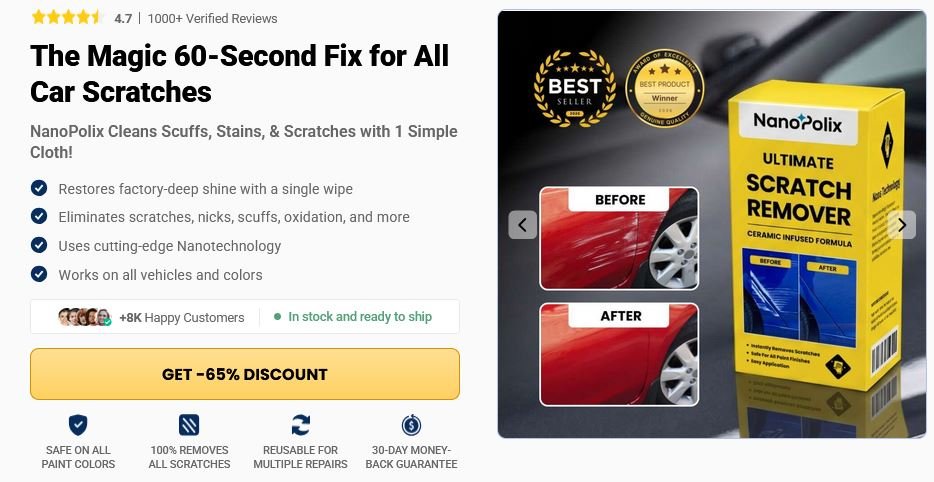
NanoPolix Scratch Remover has been everywhere online lately. The ads show dramatic before-and-after shots: scratched paint, then a wipe, then a perfect finish. The company calls it a “nano car cloth” using advanced nanotechnology to remove scratches, scuffs, oxidation, and paint imperfections without professional detailing.
But do these things actually work the way they claim? Or is it just another viral gadget with marketing that’s way too good?
Let’s break down what NanoPolix is, how it’s supposed to work, what people are actually experiencing, and whether it’s worth your money compared to traditional options.
of buying a multi-stage scratch repair kit—which usually requires separate cutting compounds, polishing liquids, microfiber towels, and surface preps—this single piece of cloth aims to handle basic spot treatments on the fly. The manufacturer positions it as a universal solution for cars, trucks, motorcycles, and RVs, regardless of the paint color.

The Science Behind How It Works:
To understand if a product like this can actually fix a scratch, it helps to look at how modern car paint is layered. Factory paint consists of three main parts: the primer on the bare metal, the base coat (the actual color), and the clear coat (the thick, protective transparent layer on top).
Most everyday imperfections—like swirl marks from automatic car washes, bush scrapes, or fingernail scratches under door handles—happen entirely within that top clear coat.
The NanoPolix cloth relies on two methods to improve the look of these marks:
1. Fine Mechanical Leveling
The fibers in the cloth act as an incredibly fine, flexible abrasive. When you apply firm, even pressure to a scuffed area, the micro-abrasives gently smooth down the sharp edges of the scratch. By leveling these rough edges, the cloth changes how light reflects off the surface, making light scratches practically invisible to the eye.
2. Optical Glazing Oils
The solution inside the cloth contains synthetic oils and polishing polymers that sink into the valley of the scratch. Because these ingredients have a similar light-reflective property to automotive clear coats, light passes straight through the filled area instead of bouncing off the crack. This gives the immediate illusion of a perfectly smooth factory finish.
What’s Actually in It?
NanoPolix doesn’t publish a detailed ingredient list. But similar products generally contain:
-
Microfiber base: The cloth structure itself
-
Mild abrasive compounds: Gently smooth the clear coat to reduce light scratch visibility
-
Polishing agents: Help create a smoother, shinier surface
-
Oils or fillers: May temporarily hide marks rather than remove them permanently
The brand leans heavily on phrases like “advanced nanotechnology” and “professional-grade repair science,” but none of this is verified by third-party testing.
Key features they highlight:
-
Reusable (wash and reuse multiple times)
-
No special tools needed—just wipe
-
Works on scratches, rust, oxidation, scuffs, paint fading, and asphalt stains
-
Results in under 60 seconds
Real-World Performance: What Can It Actually Fix?
This cloth is not a magic eraser, and its performance depends entirely on the depth of the damage you are trying to repair.
Best Uses
-
Hedge and Bush Scrapes: Long, faint lines from driving past overgrown branches usually sit right on top of the clear coat and clean up easily.
-
Door Cup Scratches: Fingernail and ring marks behind door handles respond well because the flexible cloth easily fits into tight, curved spaces where bulky machines can’t reach.
-
Paint Transfer: If another car’s bumper or a painted parking post rubs against your door, it leaves a layer of foreign paint on top of yours. The cloth breaks down and lifts this transferred paint cleanly.
-
Water Spots: Localized mineral deposits or dull spots from hard water can be buffed clean, restoring the shine underneath.
Where It Fails
-
Deep Scratches: If you run your fingernail across a scratch and it catches or drops into a distinct groove, the damage has cut through the clear coat and reached the color or primer. This cloth cannot replace missing paint.
-
Key Scratches and Vandalism: Deep, intentional gouges down to the bare metal are well beyond what a polishing cloth can handle.
-
Whole-Vehicle Swirls: Trying to restore an entire hood or a whole car by hand with a small cloth will result in an uneven, patchy finish and a very sore arm.
Who is This Product For?
This cloth is a great fit for specific situations, but it isn’t for everyone.
It’s a good choice if you are:
-
A Casual Car Owner: If you need a quick, low-stakes way to clean up minor scuffs before returning a leased vehicle, selling a used car, or trading it in.
-
Dealing with Tight Spaces: Perfect for small, tricky areas like side mirror caps, trunk thresholds, and door jambs.
-
Intimidated by Machines: If you don’t want to use high-speed power buffers, this hand-applied method has a very low risk of accidentally burning through your paint.
You should skip it if you are:
-
An Automotive Perfectionist: If you want flawless, permanent paint correction that stands up to a professional inspection light, the temporary filler oils in this cloth will disappoint you.
-
Restoring an Old, Faded Paint Job: If a car’s paint is completely chalky and faded from years of sun exposure, it needs a professional machine compound, not a spot-treatment cloth.
Honest Pros and Cons
The Pros
The best part about the NanoPolix cloth is how self-contained it is. You don’t have to worry about matching the right foam pad to the right liquid compound, and it’s safe on almost all standard factory clear coats. It is an easy tool to keep in the glove box or a garage drawer for quick, two-minute touch-ups.
The Cons
The biggest drawback comes down to basic physics. Because the cloth relies on polishing oils to help mask scratches, the initial fix can look better than it actually is. Over a few weeks—or after a couple of trips through a high-pressure car wash—those oils will naturally wash away, and the faint outlines of the scratches may return.
Furthermore, because the cloth is oily and sticky, if you drop it on the ground, it will instantly pick up sand and dirt. At that point, it’s ruined; reusing a dirty cloth will scratch your paint.
Safety and Side Effects
NanoPolix is generally safe on most vehicle paint when used as directed. The compounds and abrasives are mild enough not to cause immediate damage.
But there are some things to watch:
- Paint haze or micro-marring: Some users noticed haze or micro-marring if the cloth was used incorrectly. Aggressive rubbing or using it on already damaged paint could make things worse.
- Residue buildup: The cloth might leave oily residue that needs to be removed with a proper cleaner. This can attract dirt or look dull if not cleaned off.
- It won’t help serious damage: Using it on deep scratches won’t hurt your paint, but it won’t do anything meaningful either. You’ll just get frustrated after repeated applications.
- No known toxicity: Doesn’t seem to have hazardous chemicals, but avoid direct skin contact with polishing compounds and wash hands after use.
For light surface marks, NanoPolix is low-risk. But if you have sensitive skin or work in enclosed spaces, wear gloves and ensure ventilation.
What Customers Are Saying
Feedback on the NanoPolix cloth generally falls into two camps, largely depending on expectations.
Users looking to solve minor everyday issues—like removing white paint scuffs from a tight parking garage mishap—are usually very happy with the results. They like how fast it works and find it handy for quick cosmetic fixes.
On the other hand, critical reviews usually come from buyers who tried using it on deep, jagged scratches or keyed panels. When the cloth fails to fix serious damage down to the primer, users feel let down, often noting that it just leaves behind a greasy film without solving the underlying issue.
Why Experts Recommend Traditional Compounds
Car detailing experts generally recommend professional-grade rubbing compounds from established automotive brands over unbranded microfiber cloths for better, more durable results.
Reviews say nano cloths only work on really light scratches or marks. You’ll probably get much better results with proper scratch remover compound polish from companies like Autoglym and Meguiar’s.
Meguiar’s Scratch Eraser Kit is Car and Driver’s choice for best overall scratch remover in 2026, thanks to effectiveness, ease of use, and speed.
The Nano Cloth Problem
NanoPolix isn’t unique. Similar products like Nano Sparkle Cloth and NanoKlean have nearly identical claims. Testing of the Nano Sparkle Cloth showed it barely made a dent in most scratches and only helped tiny hair-sized ones.
Many of these appear to be rebranded, inexpensive polishing cloths marketed with exaggerated claims. Some are sourced from wholesale platforms like AliExpress at under $1 but sold for $40+.
NanoPolix Pricing and Value
The NanoPolix cloth typically sells online for anywhere between $14 and $25, depending on shipping costs and whether you buy a multi-pack bundle.
If you compare that to buying a dedicated bottle of premium polish, a pack of microfiber towels, and foam applicators, the cloth is a cheaper entry point for a quick fix. However, if you are looking at long-term value, a single cloth has much less active polishing material than a standard 16-ounce bottle of traditional liquid compound, making it less economical for large-scale or frequent maintenance.
Most online retailers offer a standard 30-day return policy. Keep in mind that because this is a consumable item that picks up paint residue the moment you use it, returns are generally restricted to unopened packages.
Frequently Asked Questions
Q. Does NanoPolix actually remove scratches?
It might reduce the appearance of very light surface scratches within the clear coat, but it doesn’t permanently remove deeper ones. Mostly conceals marks temporarily.
Q. Will this work on deep scratches that show white or grey underneath?
No. If a scratch has cut through the clear coat and exposed the underlying primer or metal, no cloth can fix it. You will need a touch-up paint pen or professional body repair to seal the panel and replace the missing color.
Q. Can I use the cloth right after washing my car while it’s still wet?
No. The car surface must be completely dry. Water dilutes the polishing oils and lubricants in the fabric, which prevents them from bonding with the clear coat and ruins the performance.
Q. What should I do if I accidentally drop the cloth on the driveway?
Throw it away immediately. The sticky oils will grab dirt and sand from the ground. If you use a contaminated cloth on your car, you will end up grinding that grit into the paint, creating a web of fresh scratches.
Q. Do I need to wash the car after using it?
You don’t need to wash the whole car, but you must buff the area with a clean, dry microfiber towel right after using the cloth. This removes the oily film left behind and clears away any loosened clear-coat particles to reveal a clean shine.
Q. Is it better than Meguiar’s or Turtle Wax?
Most experts recommend traditional compounds from established brands like Meguiar’s and Turtle Wax for better, more durable results.
Q. Does it work well on black or dark-colored cars?
Yes, it works on all colors because it targets the clear coat, which is completely transparent. However, dark paint shows oily streaks and smudges very easily. If you have a dark car, expect to spend an extra minute or two buffing the area with a clean microfiber towel to completely clear away the residue.
How to Get the Best Results?
If you decide to try the cloth, following these steps will help you get the cleanest finish possible while protecting your paint:
-
Wash and Dry the Area: Wash the target panel thoroughly with car soap to remove all surface dirt and dust. Dry it completely. Any leftover grit will scratch the paint as you rub.
-
Put on Gloves: Use the protective gloves included in the package to keep the chemical solvents off your skin.
-
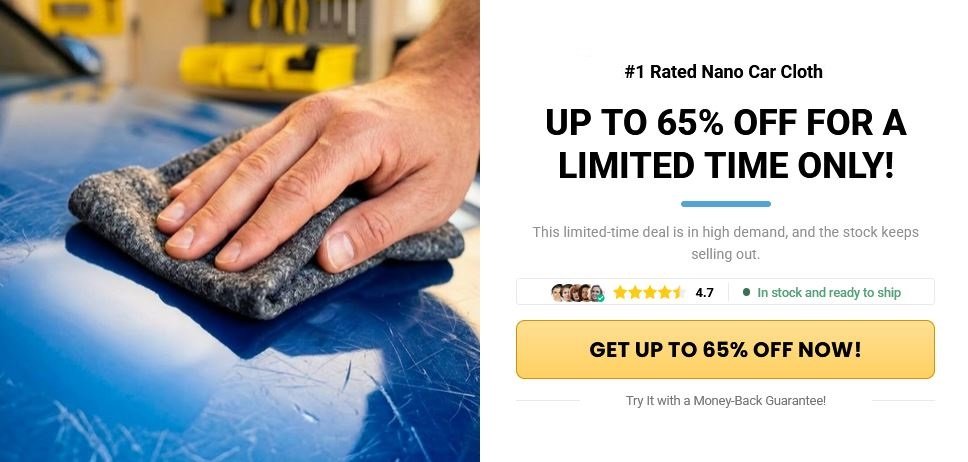
Rub Gently: Take the cloth out and rub it back and forth over the scratch using light to medium pressure. Work along the direction of the line rather than in circles, keeping your work limited to a small area.
-
Buff the Residue: Immediately take a separate, clean microfiber towel and firmly buff the area to wipe away the oily haze until the surface is dry and shiny.
-
Seal It Up: Put the cloth back into its foil pouch and seal it airtight. Store it in a cool, dry place so the lubricants don’t dry out before you need them again.
The Bottom Line
The NanoPolix Car Scratch Remover is a handy spot-treatment tool, not a garage miracle. It won’t replace the deep, permanent correction of a machine buffer, and it can’t fix deep gouges that require a paint pen.
Its real strength is pure convenience. For clearing up light scuffs, removing paint transfer from minor parking lot mishaps, or smoothing out fingernail marks under door handles, it offers a quick, hand-applied fix that takes just a few minutes without any extra tools.
If you keep your expectations realistic and use it on minor surface blemishes, it’s a highly practical item to have on hand for quick cosmetic touch-ups.